
New cloud data center combines modular edge architecture, global connectivity and regulatory compliance for operators and suppliers
Continent 8 Technologies, a leading provider of cutting‑edge managed IT solutions designed for the global iGaming and online sports betting industry, has officially opened its new data center facility at Tioga Downs Casino Resort in Nichols, New York.
Developed specifically to meet the technical, operational and regulatory requirements of New York’s online sports betting market, the purpose-built facility provides a secure and compliant environment for licensed operators and approved B2B suppliers serving one of the most significant regulated wagering jurisdictions in North America. Designed as a specialist edge data center, it reflects Continent 8’s approach of delivering industry-specific infrastructure close to the regulated markets it serves, rather than relying on large-scale hyperscale deployments.
Built using Continent 8’s modular design approach, the facility launches with approximately 500kW of capacity and 24 racks, with the ability to expand to 48 racks as customer demand grows. The site is supported by resilient power, cooling, connectivity and security systems and is fully managed by Continent 8.
The New York site extends the company’s unbeatable North American footprint and provides customers with direct access to the company’s private global network, which spans more than 100 locations across five continents, including 30+ US states.
New York is the largest regulated online sports betting market in the United States, generating more than $26 billion in wagers during 2025 alone. The facility has been developed to support the operators and suppliers serving this market, including leading brands such as FanDuel, delivering the infrastructure, connectivity and services required both for today’s operations and tomorrow’s technology requirements.
As operators increasingly explore AI-enabled applications across areas such as customer experience, operations and security, the edge deployment forms part of Continent 8’s broader strategy to support innovation within regulated environments.
Michael Tobin, Founder and Chairman at Continent 8 Technologies, said: “The future of infrastructure for our industry isn’t about building ever-larger facilities. It’s about delivering the right infrastructure in the right locations to support highly regulated markets.”
“New York is a perfect example of that approach. This facility has been developed specifically for the needs of regulated online sports betting operators and suppliers, providing the foundation they need to participate and innovate within the market.”
“We believe edge infrastructure will play an increasingly important role in the future of online sports betting, and we’re proud to be continuing that journey with this opening.”

Mike Small, Chief Executive Officer at Continent 8 Technologies, said: “Operators and suppliers increasingly need more than hosting infrastructure. They need a partner that can support connectivity, cloud, cybersecurity and emerging technologies through a single integrated platform.”
“This facility combines local market presence with access to Continent 8’s global network and managed services capabilities, helping customers deploy, scale and innovate with confidence.”
“As demand continues to grow, we’re looking forward to supporting both existing customers and new entrants as they expand their presence in the market.”
The new deployment reinforces Continent 8’s strategy of delivering market-specific infrastructure that helps operators and suppliers scale with confidence.
Joint venture helps iGaming operators deploy AI at scale with policy-aware, auditable AI applications that meet jurisdictional requirements across every market they serve.
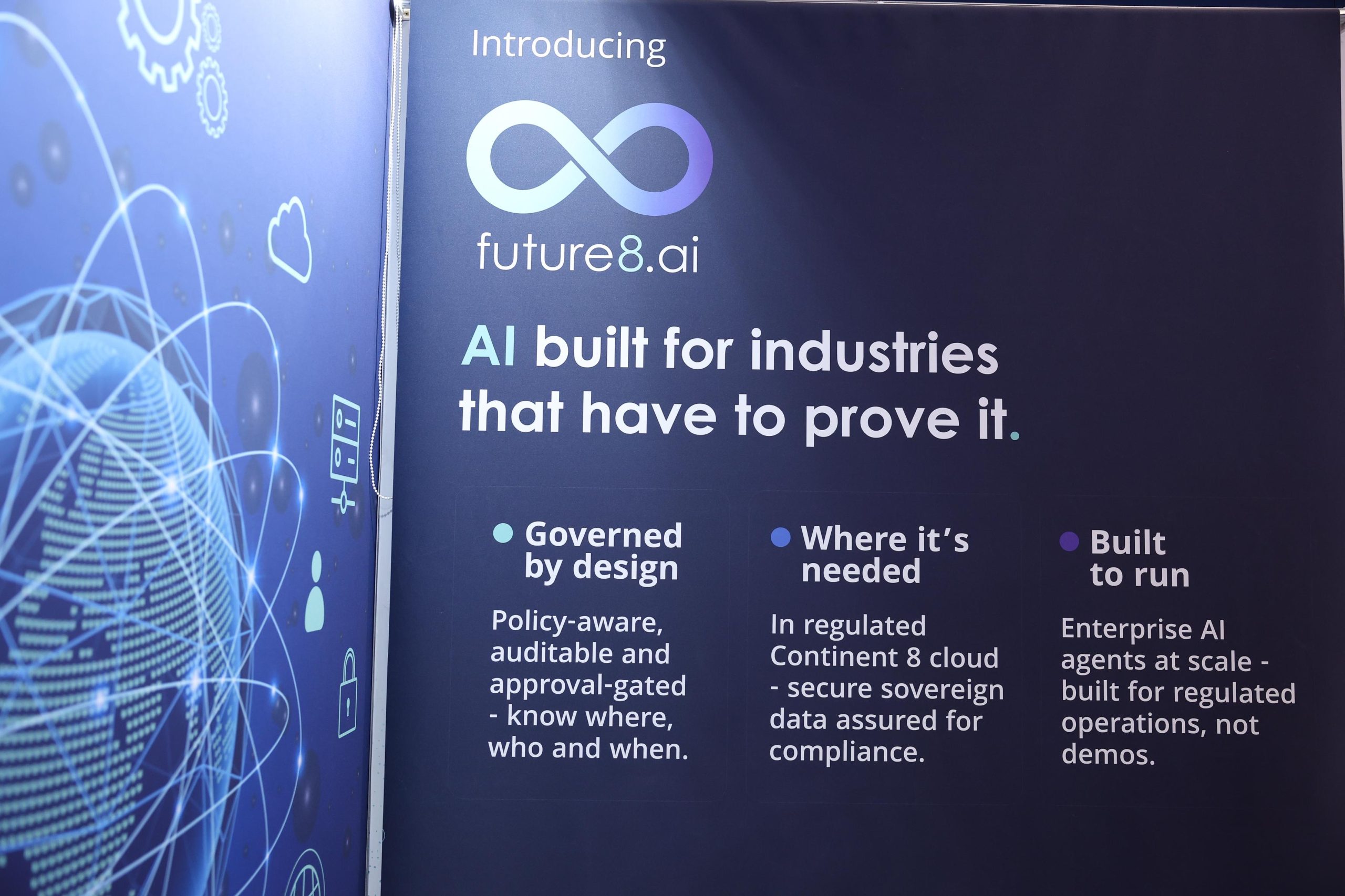
Continent 8 Technologies and FuturePath AI today launched Future8, an AI-native operating company built for regulated operators, formed as a joint venture between the two companies.
Announced at SBC Summit Lisbon, Future8 combines FuturePath’s enterprise AI applications platform with Continent 8’s licensed global operating footprint, enabling the iGaming industry to deploy auditable AI without compromising compliance, data sovereignty and operational control.
Built for highly regulated environments, Future8 enables operators to move from AI experimentation to production deployment by embedding governance, approvals and auditability into every workflow from day one.
Continent 8 brings licensed data centers and a private global network spanning more than 100 locations, built over 28 years serving the biggest iGaming and online brands, along with AI-enabled Global Capability Centers in India, the Philippines and Bulgaria. The company also contributes operational expertise, jurisdictional knowledge and intelligence derived from one of the industry’s largest collections of regulated infrastructure and operational data, helping Future8 tailor AI solutions to the operational realities of the iGaming sector.
FuturePath brings a production enterprise AI applications platform, with pre-built AI applications powered by coordinated agents, already running enterprise operations for Fortune 500 companies across multiple industries. Together, the companies are adapting proven enterprise AI to the workflows, controls and operating realities unique to iGaming. Unlike generic agent frameworks or toolkits, FuturePath delivers regulator-ready AI applications designed to solve real business challenges for licensed operators.
Until now, the iGaming sector has faced a difficult dilemma: how to deploy AI at scale while maintaining the strict, policy-aware explainability that licensing bodies demand across every jurisdiction they operate in. Regulators have moved past asking only where data sits. They now ask how a decision was made, a question AI raises and infrastructure alone never did.
Future8 is built to make that evidence automatic. Because its advantage is regulatory standing rather than physical location, it holds whether a workload runs in a Continent 8 facility, in a public cloud region, or in the operator’s own account.
This allows organizations to standardize AI governance across jurisdictions while retaining flexibility in where and how workloads are deployed.
“Everyone has AI. Almost nobody can run it in a regulated market,” said Mike Small, CEO of Continent 8 Technologies. “Future8 lets operators optimize their business and achieve efficiencies with AI that regulators can actually audit, in every jurisdiction they hold a license.”
“Our AI applications – coordinated agents executing real business work – already run real operations inside Fortune 500 enterprises, with every action governed and auditable,” said Saurabh Bhatia, CEO of FuturePath AI. “Continent 8 brings 28 years of regulatory standing that no AI company can replicate. Together, we are building the AI application and accountability layer licensed industries will need to run AI in production.”
No two iGaming operators run the same way, which is why Future8 is built to deliver outcomes rather than tools alone.
Future8 is designed to meet organizations wherever they are in their AI journey. They can engage through advisory services, managed AI-operated services or direct platform deployment, allowing them to adopt AI at a pace that matches their operational and regulatory requirements.
Its services are organized into three offerings that meet operators at any stage of AI maturity, from first assessment to full deployment:
AI Readiness Assessment for Regulated Industries. A structured evaluation of the operator’s estate, its automation opportunities, and the license conditions that govern them, concluding with a joint executive readout that maps where AI can be deployed and how it will be evidenced.
Managed AI-Operated Services. Future8 assumes the operational workload through a global delivery network, staffed onshore, nearshore, or offshore according to what each jurisdiction requires, so coverage follows the license. The operator pays for outcomes, and the work automates down over time. As automation increases, operators benefit from improved efficiency and faster execution while maintaining the governance and controls regulators require.
Platform Subscription. For organizations that prefer to run AI in their own environment, Future8 licenses the AI applications directly, layered with the jurisdictional policy, control, and evidence artifacts that make them acceptable to a regulator.
The platform can be deployed within Continent 8 infrastructure, public cloud environments or customer-owned environments while maintaining consistent governance controls.
Future8 builds on FuturePath’s field-tested enterprise AI, already proven in Fortune 500 environments, where AI applications, powered by autonomous agents, handle tens of thousands of complex workflows monthly and reduce resolution times by up to 40%. Forward Deployed Engineers work alongside operators to adapt and deploy it to their specific workflows, systems, and regulatory requirements.
Across the iGaming industry’s business, Future8 spans IT and technical operations, cloud migration, finance and procurement, and player-facing operations, with every workflow governed, auditable, and evidenced to the regulator.
Whether deployed as software, consumed as a managed service, or delivered through a hybrid model, Future8 combines AI technology, operational expertise and regulatory oversight into a single offering.
Future8 launches with an initial focus on regulated iGaming, with a longer-term vision to support additional licensed industries where governance, auditability and compliance are essential to AI adoption.
To learn more or book a demo, visit future8.ai.
Continent 8 Technologies, a leading provider of cutting-edge managed technology solutions designed for the global iGaming and online sports betting industry, today announced its expansion into Africa with the launch of a new data centre in Johannesburg, South Africa. The deployment extends Continent 8’s full portfolio of managed technology, connectivity, cloud and cybersecurity solutions into the region, supported by its purpose-built private global network and world-class digital infrastructure.
Live in Q4 2026, the Johannesburg facility marks Continent 8’s first deployment on the African continent and will enable operators, platform providers and content suppliers to deliver faster, more consistent digital experiences to South African players while remaining seamlessly connected with their wider international operations and partners.
As one of the world’s highest-volume regulated betting markets, South Africa demands infrastructure capable of supporting substantial transaction volumes with low latency and high resilience. Located close to market and directly connected to Continent 8’s private global backbone, the new facility will enable customers to leverage the same highly resilient infrastructure used across more than 100 connected locations worldwide. Operators and partners entering or expanding within South Africa will benefit from seamless access, low latency connectivity via a network that ranks among the top 20 most connected globally.
Mike Small, CEO at Continent 8 Technologies, said: “Expanding into Africa is a significant milestone for Continent 8 and a natural next step in our global growth strategy. South Africa is one of the most important, regulated betting markets in the world, and establishing a presence in Johannesburg allows us to bring the full strength of the Continent 8 platform closer to customers operating in the region. Beyond local infrastructure, customers will gain access to our private global network, cybersecurity expertise, cloud ecosystem and one of the most connected networks in the world, enabling them to innovate, scale and operate with confidence across multiple jurisdictions.”
The Johannesburg data centre will provide Tier III infrastructure within an ISO 27001-certified environment and deliver Continent 8’s full portfolio of managed technology services, including colocation, managed infrastructure, cloud connectivity, content delivery, DDoS protection and managed cybersecurity. Customers will also gain access to Continent 8’s private global network, and benefit from direct connectivity to leading hyperscale cloud providers including AWS, Google Cloud and Microsoft Azure.

Andrew Mudge, Head of EMEA Sales at Continent 8 Technologies, added: “Our customers increasingly operate across multiple regulated markets, and they want technology partners that can support that complexity without compromising on performance or reliability. Establishing a presence in Johannesburg allows us to bring our experience and infrastructure proposition directly into the South African market, while giving customers a partner they can scale with as their businesses grow. Just as importantly, they gain immediate access to the connectivity, cloud, security and managed services capabilities that underpin Continent 8’s global platform, helping them accelerate growth both within the region and internationally.“
The launch further strengthens Continent 8’s presence across regulated iGaming markets worldwide and reinforces its commitment to delivering secure, resilient and high-performance infrastructure wherever its customers operate.
Continent 8 Technologies, a leading provider of managed IT, cloud, cybersecurity and connectivity solutions for the global iGaming and online sports betting industry, has marked 20 years of operations in the Isle of Man by welcoming His Excellency Sir John Lorimer, Lieutenant Governor of the Isle of Man, to its Douglas facility.
During the visit His Excellency met members of the local team and learned more about the company’s journey from a specialist infrastructure provider into a global technology partner serving customers across the world.
The visit formed part of Continent 8’s celebrations of 20 years in the Isle of Man, where the company established operations in 2006 with the launch of a data centre in Douglas. Since then, the business has expanded significantly, growing alongside the evolution of the global iGaming industry while maintaining a long-standing presence on the Island.
Founded in 1998, Continent 8 today delivers network, connectivity, cloud, cybersecurity and AI-powered solutions to customers worldwide. The company employs more than 300 professionals globally and operates a private network spanning over 100 connected locations across Europe, the Americas, Africa and Asia.
Justin Cosnett, Chief Product Officer at Continent 8 Technologies, said: “The Isle of Man has been an important part of Continent 8’s journey for the past 20 years, and it’s a place that has become very special to me personally. Having just relocated to the Island, I’ve experienced first-hand the strong sense of community, the quality of life and the supportive environment that make it such a great place to live and work. Those same qualities have helped businesses like ours attract talent, innovate and grow.
As we celebrate this milestone, we’re proud of the contribution our Isle of Man team has made to the success of Continent 8 and grateful for the support we’ve received over the years. It was a pleasure to welcome His Excellency to our Douglas facility and share more about our history, our people and our ambitions for the future.”
His Excellency Sir John Lorimer, Lieutenant Governor of the Isle of Man, said: “It is a pleasure to visit Continent 8 Technologies and meet the team as the company celebrates 20 years in the Isle of Man. Over the past two decades, Continent 8 has grown from its Island base into an internationally recognised technology business, demonstrating the talent, ambition and innovation that are helping to shape the Isle of Man’s economy. Companies such as Continent 8 help strengthen the Island’s reputation as a place where ambitious, internationally focused businesses can establish, grow and thrive. I congratulate everyone involved on this significant milestone and wish them every success in the years ahead.”
Over the past two decades, Continent 8 Technologies has supported many of the industry’s leading operators and suppliers, including bet365, BetMGM, DraftKings, FanDuel, Kambi, Playtech and Sportingtech, helping them launch, scale and operate in regulated markets around the world.
Looking ahead, the company remains focused on investing in the technologies, talent and capabilities that will support the next generation of digital businesses and the continued evolution of regulated iGaming.
– By Cristopher Kuehl, Chief Data, Information & AI Officer

“We have an AI strategy.”
That is now fairly standard across iGaming boardrooms. The problem? Many of those strategies are already failing at the infrastructure level.
Having a strategy and having the infrastructure required to execute it are two very different things. Across the industry, there is a growing gap between ambition and operational reality. Operators are investing in heavy large language models (LLMs) and complex predictive tools. Yet many are still relying on infrastructure originally designed for traditional workloads.
If you are an operator, the question is no longer whether a provider can “host AI”. Instead, the focus should be on how their network handles the specific, high-velocity and highly regulated demands of iGaming.
Here are the core technical questions to bring to your next vendor review.
Legacy iGaming infrastructure was built around CPUs and RAM. Modern AI requires parallel processing, graphics processing units (GPUs) and Neural Processing Units (NPUs).
If your provider is quoting standard cloud instances without detailing specialised hardware clusters, this may limit AI performance and scalability. Operators should look to providers that can offer access to high-performance GPU infrastructure within regulated environments.
Running workloads on a general-purpose cloud in a different country can create latency. Localised, high-density compute is often needed to handle real-time fraud detection and in-play personalisation.
Data residency is a strict, known regulatory requirement in iGaming and online sports betting. Player data cannot cross certain borders. However, AI creates additional complexity: not just where data is stored but where it is processed.
For example, if your player database sits in Ontario, Canada, but the AI model that is performing lives in a data centre in Virginia, US, this may raise compliance concerns depending on how data is processed and transferred. Regulators across multiple jurisdictions, including the UK and North America, are increasing scrutiny of data residency, cross-border processing and third-party dependencies.
As a result, operators should ensure that both data and the associated AI processing remain within approved regulatory boundaries. In practice, this means working with providers that support in-country or regionally compliant AI deployments.
Regulators require transparency. For example, if an algorithm flags a VIP player for problem gambling or blocks a withdrawal, the operator must be able to prove the reasons why it happened.
Standard logging alone is insufficient. You need telemetry that captures model inputs, the exact weights used, and the confidence score of the output.
Asking the provider what kind of audit logging they support at the model layer is important. Without a regulator-ready audit trail of a specific AI decision, operators cannot deploy that model in a live environment. Operators should be able to recreate the exact logic path the AI took at any historical timestamp.
In our sector, milliseconds translate directly to revenue. Research across digital platforms shows that even a one-second delay in mobile load time can reduce conversion rates by up to 20%. This highlights how sensitive user engagement is to performance, particularly in mobile-first environments that closely mirror player behaviour.
At the same time, the cost of disruption is immediate. Industry estimates suggest downtime in gaming environments can exceed $6,000 per minute, underlining the direct financial impact of even short service interruptions.
Therefore, in use cases such as real-time odds generation or live bet limits triggering, the processing time should be near zero. Operators should assess the proximity between their operational data and AI compute environments. Architectures relying on public internet connectivity may suffer in terms of user experience. A private, high-speed connection between your raw operational data and your AI models is needed, ideally with the compute sitting adjacent to the data.
Operators should evaluate orchestration and security. Scaling AI capacity based on a Saturday night player load requires managed Kubernetes specifically tuned for AI workloads. Your provider needs to scale GPU allocation up and down dynamically.
Furthermore, the security perimeter for AI is fundamentally different. Standard firewalls may not be able to stop prompt injection attacks or model manipulation.
Threat actors are no longer just trying to steal data. They are trying to disrupt the models behind the business decisions. Providers need to be able to demonstrate to operators their AI-specific defense mechanisms and how they protect the integrity of the model itself.
Stop treating AI as a plugin. It is becoming a foundational component of modern technology stacks.
The industry is moving out of the experimental phase of chatbots and into the scale phase of adoption. Even a brilliant predictive model relies on the quality of the infrastructure supporting it.
The opportunity is clear: ask better questions, demand better answers, and choose partners built for regulated AI at scale.
Before selecting an AI infrastructure provider, operators should pressure-test capabilities against a core set of non-negotiable requirements.
Continent8 has built its infrastructure specifically for the demands of regulated iGaming and online sports betting, not retrofitted from general-purpose cloud environments.
With a global footprint of licensed locations spanning over 100 data centres globally, private high-speed connectivity, and in-country compute capabilities, Continent 8 enables operators to deploy AI workloads where they need to run – securely, compliantly, and with minimal latency.
From GPU-enabled environments to fully auditable architectures and AI-aware security, the focus is on delivering infrastructure that is aligned to the operational realities of modern iGaming. As AI moves into core production systems, having a provider that understands both the regulatory landscape and the performance requirements becomes essential.
To see how leading operators are deploying AI securely, compliantly and at scale using purpose-built infrastructure, explore iGaming Business’ latest industry report: What operators should be asking their AI solution providers in 2026
Expanded collaboration enables Continent 8 to bring new multitenant cloud and AI-ready capabilities to customers worldwide.
Continent 8 Technologies, a leading provider of cutting‑edge managed technology solutions designed for the global iGaming and online sports betting industry, today announced the extension of its partnership with Nutanix, a hybrid cloud leader and AI innovator.
The expanded partnership builds on a collaboration between the two companies and reflects a commitment to delivering enterprise-grade cloud solutions for highly regulated industries. Going beyond a traditional vendor relationship, Continent 8 and Nutanix work closely together to develop and refine cloud technologies that address the performance, security and compliance requirements of regulated operators worldwide.
A key example of this collaboration is Continent 8’s selection as an early access partner to help shape Nutanix Service Provider Central (SP Central), its new multitenant cloud platform, first announced in April 2026.

Continent 8 will be among one of the first service providers worldwide to deploy a service leveraging SP Central commercially, combining Nutanix’s multitenant capabilities with Continent 8’s proven operational governance model. This approach is designed to maintain strict control and oversight across individual customer environments, a critical requirement for iGaming operators operating under complex regulatory frameworks.
The partnership extension also supports Continent 8’s continued investment in cloud expertise, engineering excellence and customer success. Through its global team of certified cloud specialists and AI-enabled Global Capability Centers (in India, Philippines and Bulgaria), Continent 8 supports large-scale cloud migrations and infrastructure modernization programs, helping customers simplify operations, optimize costs, reduce complexity and navigate evolving regulatory requirements.
Mike Small, Chief Executive Officer at Continent 8 Technologies, said: “Today’s announcement reflects the strength of our relationship with Nutanix and our shared vision for the future of enterprise-grade cloud infrastructure and services.”
“Together, we have built a partnership founded on innovation, trust and a deep understanding of the challenges faced by highly regulated industries. Extending our partnership reinforces our commitment to helping iGaming customers modernize with confidence, simplify operations, optimize costs and prepare for the next generation of digital services, cloud-native applications and AI-driven innovation.”
Edward O’Connor, Chief Technology Officer at Continent 8 Technologies, added: “Our relationship with Nutanix is much deeper than a traditional vendor relationship. For several years, our engineering and product teams have worked side-by-side to help shape solutions that address real-world service provider and customer requirements.”
“Through this collaboration, Continent 8 is delivering cloud services that combine enterprise-grade security, operational simplicity and the flexibility customers need to scale globally, accelerate innovation and respond to evolving business demands. Being one of the Nutanix Elevate Service Provider partners worldwide to deploy the new multitenant solution demonstrates the strength of our partnership and our commitment to bringing innovative cloud capabilities to customers first.”
“We are excited to collaborate with Continent 8 to bring enterprise cloud services powered by Nutanix to highly regulated industries. Our collaboration with Continent 8 is a prime example of how we are empowering service providers to build and scale cloud services. By leveraging the Nutanix Cloud Platform and SP Central and their multitenant capabilities, Continent 8 is equipped to deliver the operational simplicity, security, and performance that their customers demand and need,” commented Sachin Chheda, Vice President, Business Development and Strategic Partnerships at Nutanix.
The partnership has already delivered measurable results for customers across the global iGaming and online sports betting sector. Organizations such as Sportingtech have benefited from Continent 8’s cloud modernisation capabilities, where Continent 8 led a VMware-to-Nutanix migration that avoided a significant projected rise in virtualization costs while preserving the security, performance, and compliance posture required in regulated markets.
— By Craig Lusher, Principal Solutions Architect at Continent 8 Technologies
This blog looks at why security investment so often stalls, and how Continent 8 Technologies’ new Loyalty+ programme is designed to give eligible customers a clearer route to strengthening their cyber resilience.

Most organisations already know their security could be better. Far fewer have an obvious route to getting there.
That gap is rarely about awareness. In iGaming and online sports betting, security sits on board agendas, in supplier contracts and under regulatory scrutiny. The difficulty is more practical. Security work competes for budget against everything else a business needs to fund, and the case for spending money on a problem that has not happened yet is always harder to make than the case for spending it on one that has.
The evidence has not made that argument any easier to win. Verizon’s 2026 Data Breach Investigations Report analysed more than 31,000 security incidents and over 22,000 confirmed breaches across 145 countries. It found third parties involved in 48% of breaches, a 60% rise year on year, and recorded exploitation of vulnerabilities overtaking stolen credentials as the most common way into an organisation for the first time in 19 years, accounting for 31% of breaches against 13% for credentials. Remediation is not keeping pace: only 26% of the vulnerabilities in CISA’s Known Exploited Vulnerabilities catalogue were fully patched during 2025, with a median remediation time of 43 days.
The cost when something does go wrong has climbed as well. IBM’s 2026 Cost of a Data Breach Report puts the global average at $4.99 million, up 12% on the previous year. More than a quarter of organisations hit by a malicious attack said it was AI-driven, and those incidents added around $1 million each to the total. Downtime carries a separate bill. ITIC’s research into the hourly cost of downtime found that more than 90% of mid-size and large enterprises lose over $300,000 for every hour of outage, with 41% putting their exposure between $1 million and more than $5 million an hour.
For a sector built on interconnected platforms, specialist suppliers and always-on services, the third-party and downtime figures tend to be the ones that land hardest.
In practice, security spend is often triggered by something external. A regulator asks a question, a customer sends a security questionnaire, a penetration test result lands, or an incident forces the issue. Each of those produces a purchase, but not necessarily a plan.
The result is familiar. Controls accumulate one at a time, chosen to answer whichever question was being asked at the time, and the joins between them are rarely revisited. Meanwhile the work that has no immediate trigger, such as testing an application nobody has looked at for two years, running a phishing simulation, or checking whether your brand is being spoofed somewhere, keeps sliding down the list because nothing is forcing it up.
None of this reflects badly on the teams involved. It reflects how budgets work. Money that is already committed to infrastructure is easier to defend than money that has to be found for something optional.
Loyalty+ is Continent 8’s new security credits programme. Eligible contracts are automatically enrolled in the Loyalty+ programme, enabling customers to earn security credits worth 5% of the Total Contract Value (TCV) of invoiced Continent 8 spend. These credits can then be redeemed against our qualifying cybersecurity services.
One credit is worth one US dollar when it is redeemed, so there is no conversion to work out and no ambiguity about what a balance is worth. There is nothing to buy and no sign-up process. If you have new invoiced spend with us, you earn credits automatically under the programme terms.
For contracts of twelve months or longer, the credits for the whole term are granted when you sign, rather than trickling in month by month. A customer on $20,000 a month across cloud and colocation, signing a 24-month term, has 24,000 credits available from day one, worth $24,000 against security services.
The practical effect is that the security work which normally waits for a trigger already has funding attached to it before the trigger arrives.
Credits can only be redeemed against Continent 8 security services, within that, the choice is entirely yours. If you already have a supplier for penetration testing, direct your balance somewhere else. If you want to trial a service before committing budget to it, credits let you do that without a business case.
The catalogue covers two broad groups: one-time engagements, such as VAPTs and Audits and ongoing solutions, such as MSOC (Managed Security Operations Centre), EDR and MDR services, Threat Exchange, the SafeBait platform and dark web monitoring.
You can pay part in credits and part in cash, so a balance that does not quite cover a piece of work is still useful. The minimum redemption is 250 credits. Subscriptions funded with credits carry a minimum twelve-month commitment, and continue at the standard rate afterwards unless you cancel. Your Account Manager holds the current credit price of each service and can arrange redemptions, though some engagements, penetration testing in particular, need scheduling and take a few weeks to organise.
Credits expire twelve months after they are granted. When you redeem, the oldest credits in your balance are used first, so your more recent credits keep their full validity. We aim to remind you around 60 days and again around 30 days before anything is due to expire.
When you renew a contract, you receive a fresh allocation for the new term, any unused credits carry over, and the expiry clock resets from the renewal date. If you end all of your Continent 8 services, you have 90 days from your final service ending to redeem what remains.
Credits have no cash value. They cannot be exchanged for money or account credit, transferred to another customer, applied to non-security services, or refunded. The programme is offered at our discretion and the full terms are available from your Account Manager.
We should also say what Loyalty+ is not. It does not make an organisation secure, and no programme of this kind could. It funds work that we think is worth doing, and the value of that work depends entirely on what you choose to do with the findings.
The version launching now is deliberately simple. Every customer earns at the same 5% rate, and the mechanics are kept easy to explain.
Continent 8 has been protecting the iGaming and online sports betting industry for decades. In a sector where one organisation’s exposure can reach across connected platforms, suppliers and players, we have a direct interest in the security maturity of the businesses we work with, not only our own. Loyalty+ is one attempt to act on that.
For eligible Continent 8 customers, it turns spend you have already committed into security work you might otherwise have deferred. To find out what your balance could be, speak to your Account Manager or visit https://www.continent8.com/loyalty. T&Cs apply https://www.continent8.com/loyalty-tc/.
In the iGaming industry, cybersecurity is not just about protection – it’s about uptime, regulatory compliance, and player trust.
Vulnerability Assessment and Penetration Testing (VAPT) plays a critical role in achieving those outcomes. Yet too often, the service operators and suppliers receive fails to deliver meaningful value.
Across the iGaming industry, we consistently hear the same frustrations. These aren’t minor issues – they represent gaps that can directly impact resilience, compliance, and revenue.
Here are the eight most common complaints – and what iGaming organisations should really expect instead.
This is one of the biggest challenges. Many VAPT reports focus heavily on technical scoring systems without explaining what the findings actually mean in an operational context.
The reality is that iGaming organisations need to understand how vulnerabilities affect player data, wallet integrity, and platform availability – not just their severity rating.
At Continent 8, we frame every finding in terms of real-world impact, linking vulnerabilities directly to risks such as player account compromise, payment exposure, or downtime during peak events – ensuring both technical and non-technical stakeholders can take action.
A long list of issues without clear direction often creates more confusion than clarity – particularly in complex, high-availability environments.
The reality is that operators need practical, prioritised guidance that can be implemented without introducing risk or disrupting services.
That’s why our approach focuses on:
Too many VAPT engagements are carried out purely to tick a regulatory box, resulting in limited depth and minimal real-world value.
The reality is that attackers don’t work to compliance frameworks – they exploit weaknesses in real time.
That’s why we take a threat-led approach, focusing on:
We help customers move beyond compliance towards genuine resilience.
In iGaming, downtime isn’t just inconvenient – it directly impacts revenue and player trust, especially during major sporting events. We calculate that the average cost per minute for an operator during downing is $6K!
The reality is that security testing must work around operational priorities, not against them.
That’s why our engagements are designed to:
Security should strengthen availability – not risk it.
A lack of communication during VAPT engagements often leaves organisations uncertain about progress, findings, and potential risks. The reality is that testing should be a collaborative process, particularly in regulated environments where transparency matters.
Our approach ensures:
This gives customers greater visibility – and faster resolution of critical issues.
Fixing vulnerabilities is only part of the process. Without validation, organisations can’t be confident the risk has been fully addressed – or demonstrate that to regulators.
The reality is that verification is essential for both security assurance and compliance.
That’s why we include:
iGaming environments are highly specialised, with complex integrations across platforms, wallets, APIs, and multi-jurisdiction infrastructure.
The reality is that generic testing approaches often miss the most critical risks.
At Continent 8, our deep experience (28+ years) in the sector means we understand:
This allows us to deliver relevant, targeted testing aligned to real-world environments.
Many organisations still rely on periodic testing, despite operating in a landscape where platforms and threats evolve continuously.
The reality is that a once-a-year test cannot provide meaningful assurance in a dynamic iGaming ecosystem. You need a long-term partner, not a one-off vendor.
That’s why we position VAPT as part of a continuous security lifecycle, including:
In iGaming, the stakes are uniquely high. Security failures don’t just create risk – they can impact revenue, compliance, and player trust in real time.
VAPT should not be treated as a standalone exercise, but as a strategic capability that evolves alongside your platform.
At Continent 8, we’ve built our approach around what iGaming organisations actually need:
Because in iGaming, it’s not just about identifying vulnerabilities – it’s about ensuring your platform remains secure, resilient, and always available.
And we’re proud to be trusted by some of the biggest names in the industry, including: TheScore, NeoGames, Hard Rock, ODDSworks and more.
Thinking of switching providers? Experience a better standard of VAPT – without the switching risk.
If you’re considering replacing your current provider, we offer 25% off your first VAPT engagement* (based on our standard pricing), so you can properly evaluate a more effective approach. Learn more here
*T&Cs apply
Continent 8 Technologies, a leading provider of cutting-edge managed IT solutions designed for the global iGaming and online sports betting industry, announces the launch of Loyalty+, a new cybersecurity rewards programme exclusive to its customer base.
Loyalty+ introduces a structured framework that rewards Continent 8 customer loyalty while enabling iGaming operators, suppliers and content providers to strengthen their cybersecurity posture. By turning engagement into tangible security value, the programme supports sustainable improved resilience not just at an individual level, but across the wider industry.
Loyalty+ rewards Continent 8 customers with 5% back on their existing spend – turning investment in the likes of cloud, co-location, AWS and managed services into cybersecurity credits for services such as penetration testing, phishing simulation, MSOC and MDR burst spend.
The launch comes at a time of rapidly escalating cyber risk across both enterprise and iGaming environments. Cyber incidents affecting the iGaming sector have surged by 400% between 2023 and 2025, while third-party vulnerabilities now account for 60% of data breaches. With the growing value of sensitive data – such as KYC and financial information – and downtime reaching at up to $6,000 per minute for operators, organisations are under increasing pressure to take a more proactive approach to cybersecurity. This is further compounded by tightening regulatory expectations, with iGaming operators required to meet strict and often differing compliance requirements across multiple regulated markets.

Against this backdrop, Loyalty+ aims to encourage a shift away from reactive security investment, adopting a more proactive and structured approach to cybersecurity.
“Modern iGaming platforms are becoming increasingly complex, with multiple third-party components, distributed environments, and growing performance demands, each introducing new potential points of risk,” said Anthony Abou-Jaoude, Chief Transformation Officer at Continent 8 Technologies.
“Security can no longer be treated as a bolt-on. With Loyalty+, we want to make cybersecurity adoption front of mind, supporting greater protection across the industry while rewarding the loyalty of our customers.”
Additional information is available at www.continent8.com/loyalty – terms and conditions apply.
Our Chief Transformation Officer, Anthony Abou-Jaoude, comments on how AI signals a shift towards faster, more autonomous cyber capability – and why iGaming companies must respond with greater resilience and visibility.

Artificial Intelligence (AI) is evolving at an unprecedented pace, transforming both how cyber criminals operate and how organisations defend themselves. As AI models become more capable, the speed of vulnerability discovery, reconnaissance, phishing and attack preparation is increasing, changing the economics of cyber attacks and reducing the time defenders have to respond.
Recent developments such as Anthropic’s Claude Mythos, alongside a wider wave of AI-driven cybersecurity initiatives, have highlighted just how quickly these capabilities are progressing. But while individual models may dominate the headlines, they are part of a much broader trend: AI is moving beyond content generation and into increasingly sophisticated security research and automation.
For iGaming operators, this shift is particularly important. The industry relies on always-on platforms, complex third-party ecosystems and high levels of customer trust. As AI accelerates the ability to identify and exploit weaknesses, operators face greater pressure to reduce exposure, improve visibility and strengthen resilience across their environments.
From our perspective working with the iGaming sector, the key change is not just the technology itself, but how quickly it is compressing the time between identifying weaknesses and exploiting them in live environments.
Recent analysis from Bain and the UK AI Security Institute points in the same direction: AI-enabled cyber capability is accelerating, requiring organisations to adopt more proactive, continuously monitored and resilient security models.
Industry data reinforces the urgency. Verizon’s 2025 Data Breach Investigations Report found that credential abuse remained the leading initial access vector in breaches at 22%, while vulnerability exploitation rose to 20%. Human involvement remained present in 60% of breaches and third-party involvement doubled to 30%. For operators managing high-value platforms and multiple suppliers, these risks are already business-critical.
Recent incidents in the iGaming supply chain have also shown how weaknesses at third-party providers can translate directly into financial and operational impact, including cases where compromised systems enabled exploitation of game mechanics and payouts.
The message is clear: as AI continues to reshape the threat landscape, organisations can no longer rely on traditional security approaches alone.
Here are eight priorities every iGaming organisation should focus on today.
The window between a vulnerability being disclosed and exploited is shrinking rapidly.
Continuous vulnerability assessments, penetration testing and efficient patch management are critical to identifying and remediating weaknesses before attackers can take advantage of them. In reality, we are already seeing shorter windows between vulnerability disclosure and exploitation, particularly across cloud infrastructure and third-party integrations. This is where the Claude Mythos story becomes relevant in practical terms: as AI improves vulnerability discovery, the time organisations have to assess exposure and remediate weaknesses will continue to shrink.
External commentary has gone as far as describing an approaching flood of machine-speed findings and a collapse in the window between discovery and weaponisation. Verizon’s 2025 DBIR also reported that exploitation of vulnerabilities as an initial access step grew by 34% year over year, while only around 54% of perimeter device vulnerabilities were fully remediated, with a median remediation time of 32 days. Organisations that can reduce that exposure window will be significantly better positioned to defend against AI-enhanced attacks.
Cyber resilience starts with understanding where your biggest risks lie.
Infrastructure assessments, architecture reviews and security consulting help organisations identify hidden dependencies, misconfigurations and operational weaknesses before they become business-critical incidents. In an industry where availability is essential, resilient design is just as important as strong perimeter security. This is also where zero trust principles, segmentation and the elimination of avoidable single points of failure become increasingly important as AI compresses the time attackers need to probe and exploit weaknesses.
Threat actors don’t work to business hours, and neither should your security operations.
Continuous monitoring through a modern managed Security Operations Centre (SOC), supported by SIEM, EDR and MDR capabilities, enables organisations to detect suspicious activity quickly, investigate incidents efficiently and respond before they become major business disruptions. This matters even more during high-pressure periods we’re seeing, such as major sporting events, promotional campaigns and holiday traffic peaks, when availability is business-critical and attackers know disruption has greater leverage.
Our data reports have repeatedly shown that DDoS activity intensifies around high-profile events and high-demand periods such as Christmas, especially in sectors where uptime directly affects revenue and customer trust. In this sense, the future of iGaming security depends not only on prevention, but on maintaining continuous visibility when attack conditions are most favourable.
The earlier threats are identified, the more options defenders have to contain them.
As AI makes phishing attacks more convincing, stolen credentials remain one of the simplest ways for attackers to gain access to critical systems.
Multi-factor authentication (MFA), privileged access management and least-privilege policies continue to be among the most effective controls iGaming operators can implement. In today’s threat landscape, identity has become the new security perimeter. That is particularly relevant in iGaming, where account takeover, credential stuffing and promotional abuse are well-recognised attack paths. Recent cyber incidents at large casino and betting operators have also stemmed from compromised employee accounts, reinforcing how credential-based attacks remain a critical risk even in mature environments and why stronger authentication and tighter access controls are essential.
Across the environments we manage, credential-based attacks remain one of the most consistent and effective entry points for attackers.
Modern gaming environments span cloud infrastructure, private networks, edge locations and multiple third-party providers.
Without comprehensive visibility, security teams risk missing early indicators of compromise.
Centralised monitoring, security analytics and unified visibility enable organisations to identify risks faster, prioritise investigations more effectively and maintain stronger operational resilience across increasingly complex environments. As organisations adopt more AI tools internally, visibility also needs to extend to how those tools are being used, what data they can access and where governance controls may be lacking.
As AI enhances phishing sophistication and enables more convincing impersonation attempts, stolen credentials remain one of the simplest ways for attackers to gain access to critical systems. We are seeing phishing campaigns that are increasingly difficult for users to distinguish from legitimate communications, even in well-trained organisations, further increasing the importance of continuous awareness.
According to ENISA’s 2025 Threat Landscape report, phishing accounts for around 60% of all initial intrusion attempts, and over 80% of social engineering campaigns now use AI-generated content. In response, multi-factor authentication (MFA), privileged access management, and least-privilege policies continue to be among the most effective controls iGaming companies can implement. Regular phishing simulations and security awareness training help reinforce these controls. In today’s threat landscape, identity has become the new security perimeter.
No organisation can expect to prevent every cyber attack.
What separates resilient organisations is how effectively they respond when an incident occurs.
Well-defined incident response plans, regular tabletop exercises, threat intelligence sharing and clearly established communication processes help minimise disruption, accelerate recovery and protect customer trust when every minute counts. In an AI-driven threat landscape, resilience depends on being able to make faster decisions under pressure, contain attacks earlier and recover services without prolonged operational impact.
While AI is helping attackers become more sophisticated, it is also transforming cyber defence.
AI-powered security operations can analyse vast volumes of telemetry, identify behavioural anomalies, prioritise alerts and accelerate investigations faster than traditional manual processes alone. That is the constructive side of the Claude Mythos conversation. The headline may be about what advanced models could enable, but the real opportunity for operators lies in applying AI carefully and defensibly within security operations to improve visibility, triage and response. In the years ahead, cybersecurity will increasingly become an AI-vs-AI challenge, with organisations needing trusted human oversight, strong governance and resilient operating models alongside automation.
By combining AI with experienced security professionals, organisations can improve detection, reduce response times and strengthen their overall security posture in an increasingly complex threat landscape.
Looking beyond today’s headlines
Claude Mythos may be one of the latest headlines, but it is only one example of a much broader shift. AI is changing the speed, scale and sophistication of cyber activity across the board, creating both new opportunities for defenders and new advantages for attackers. For the iGaming industry, the question is not whether AI will reshape the threat landscape, but whether organisations are prepared to adapt as quickly as it evolves.
The companies best placed to succeed will be those that translate this shift into practical action: shorter patch cycles, stronger identity controls, better visibility across hybrid environments, continuous monitoring, more mature incident response and ongoing workforce awareness. In other words, the same eight priorities outlined here become even more important as AI raises the pace of attack and defence alike.
The future of iGaming security will not be defined by a single tool or model. It will belong to organisations that continuously adapt by reducing vulnerabilities, strengthening infrastructure, improving visibility, investing in their people and embracing AI as part of a proactive cybersecurity strategy grounded in real operational risk.
At Continent 8, we believe cybersecurity is no longer just about protecting technology. It is about protecting business continuity, player trust and long-term growth across the iGaming industry. That is why operators are increasingly looking for joined-up support across areas such as vulnerability assessment and penetration testing, managed SOC and SIEM, EDR and MDR, phishing simulation, identity security and MFA, rather than relying on isolated point solutions.
As AI continues to redefine the threat landscape, companies that invest in resilience today will be better positioned to stay ahead of tomorrow’s threats. For the iGaming sector, that means combining strong cyber fundamentals with continuous monitoring, informed governance and practical use of AI in cyber defence. To learn how Continent 8 supports always-on environments with layered cybersecurity services, speak to our team at sales@continent8.com.